What Is a Buying Group?
A buying group—also known as a group purchasing organization (GPO)—helps organizations access pre-negotiated contracts by leveraging the collective purchasing power of multiple members. At Purchasing Edge, we focus on helping organizations better understand and evaluate these options.
Instead of sourcing and negotiating with vendors individually, organizations can use a buying group to streamline procurement and reduce costs.
If you’re new to this concept, start with our guide on what a purchasing group is.
Why Partner With a Buying Group?
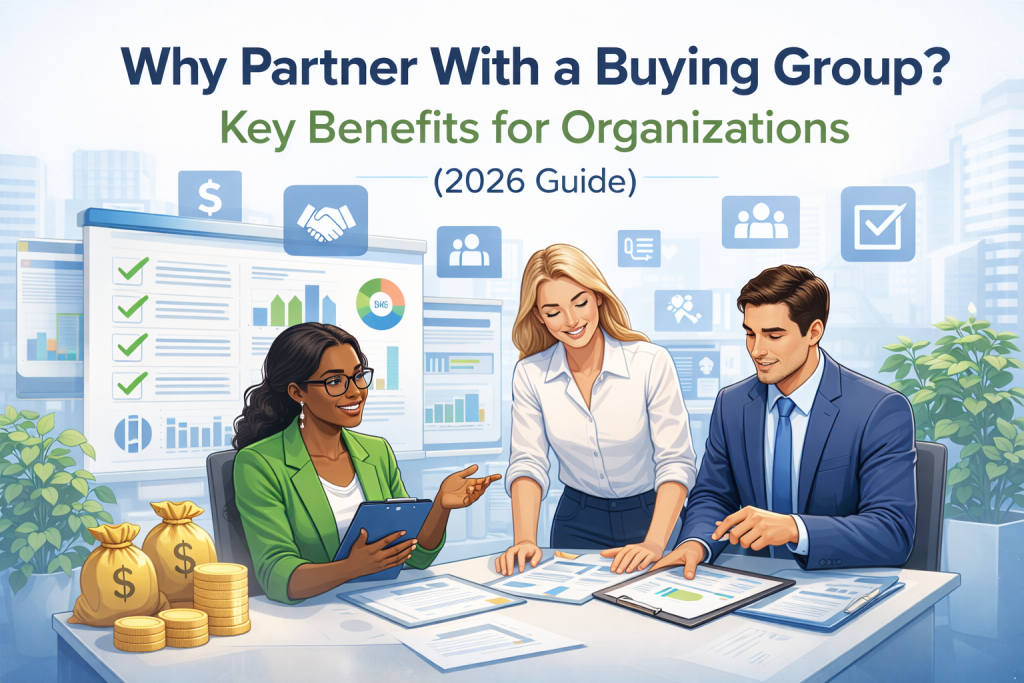
Partnering with a buying group is not just about saving money—it’s about improving how your organization purchases, manages suppliers, and operates overall.
Below are the key benefits to consider.
1. Cost Savings Through Collective Buying Power
One of the primary reasons organizations join buying groups is cost savings.
By aggregating demand across many members, buying groups can negotiate better pricing, terms, and rebates than individual organizations typically can on their own.
Even without seeing exact pricing upfront, the scale of these agreements often leads to significant savings.
To evaluate which option is right for your organization, see our guide on how to choose the right purchasing group.
2. Time Savings and Procurement Efficiency
Sourcing vendors, negotiating contracts, and managing RFPs can be time-consuming.
Buying groups simplify this process by providing:
- Pre-negotiated contracts
- Vetted supplier networks
- Streamlined procurement workflows
This allows your team to focus on higher-value strategic activities instead of repetitive sourcing tasks.
3. Access to Trusted and Vetted Suppliers
Buying groups typically maintain a curated network of suppliers that have already been evaluated for:
- Quality
- Pricing competitiveness
- Reliability
This reduces risk and ensures you are working with reputable vendors.
Can You Still Use Your Existing Vendors?
Yes—depending on the buying group.
Some organizations allow you to:
- Continue using existing vendors if they are already under contract
- Bring vendors into the network
- Supplement contracts with custom sourcing
This flexibility is important for organizations that already have established supplier relationships.
You can also explore the top purchasing organizations by industry to find providers that align with your needs.
4. Improved Compliance and Reduced Maverick Spending
Buying groups help organizations standardize purchasing behavior.
This leads to:
- Increased compliance with approved contracts
- Reduced off-contract (“maverick”) spending
- Better audit readiness
For government, education, and healthcare organizations, this is especially valuable.
5. Better Data and Purchasing Insights
Many modern buying groups provide access to analytics and reporting tools.
These insights can help you:
- Track spending patterns
- Identify cost-saving opportunities
- Optimize purchasing behavior over time
Data-driven procurement leads to more informed decision-making.
6. Technology and Integration Benefits
Buying groups often integrate with procurement systems and tools, including:
- ERP systems (SAP, Oracle, Microsoft Dynamics)
- eProcurement platforms
- Punchout catalogs
Platforms like SAP Ariba and Jaggaer help streamline purchasing workflows and improve efficiency.
7. Strategic Long-Term Value (“Second-Generation Savings”)
Beyond initial cost reductions, buying groups create long-term value through:
- Supplier collaboration and innovation
- Volume consolidation across departments
- Process improvements and automation
- Sustainability and diversity initiatives
These benefits compound over time and often exceed initial savings.
8. Flexibility and Scalability
Many buying groups offer flexible membership models, allowing organizations to:
- Join multiple groups
- Scale usage over time
- Adopt contracts as needed
This makes them a low-risk, high-upside solution for organizations of all sizes.
When Does a Buying Group Make the Most Sense?
Buying groups are especially valuable if:
- You lack internal procurement resources
- You want to reduce costs without running full RFP processes
- You need faster access to vetted suppliers
- You want to improve compliance and efficiency
Final Thoughts
Partnering with a buying group can transform how your organization approaches procurement.
From cost savings and efficiency to long-term strategic value, buying groups provide a powerful way to optimize purchasing without increasing internal complexity.
If you’re evaluating whether a buying group is right for you, understanding these benefits is the first step toward making a smarter decision.
You can also review additional procurement resource organizations to support your research and decision-making process.
Or, if you want help comparing options, you can find the right purchasing group for your organization here.